Dear @Jairo_Lourenco_dos_S ,
wait a while !
In your ESP32 code you are using the classic BT and therefore you shall not use the BLE on AI2 side.
So, classic BT on ESP32 shall pair classic BT on AI2, as in your first post.
IMHO, due to its ease of use and long-term reliability, this is the best choice.
Later on, whether you'll need a lower power consumption, and once you have become familiar with the BT, you might pass to BLE. Only in that case (BLE) you need the extension.
Having said that, there are several things you shall pay attention to.
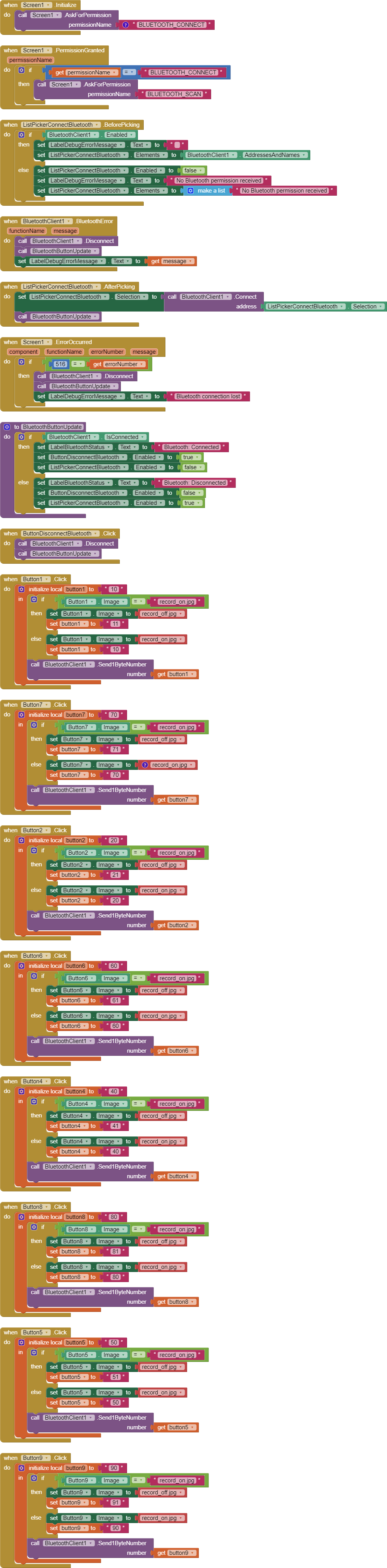
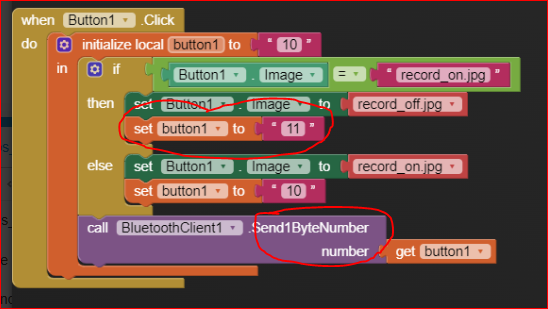
In your AI2 code you transmits bytes, while you assign strings to variables, that is:
Since button1 is assigned to be "11" (or "10"), this means a couple of characters "1" "0" or "1" 1".
Each one in ASCII is a byte (0x31 0x30) = "10"; (0x31 0x31) = "11". When you transmits a single byte, only the first one is transmitted.
If you still want to transmit only one byte at a time, you shall assign to the button1 variable a mathematical value (i.e. blue blocks).
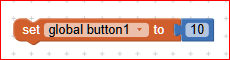
Since you will do different actions according to the received data, while you don't use characters ?
By sending characters, i.e. "A", "B", "C",..... your case intruction on the ESP32 code will be simply
case "A":
....
...
break;
case "B":
...
...
break;
and so on without the need to work on 'dadorecibido' (which in turn shall be declared simply char)
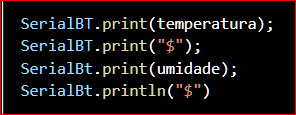
In addition to this, I see that in your ESP32 code you send data to the app:
but where is the clock in AI2 to receive these data ? I don't see it in the blocks you posted.
In attachment you can find an old example that I did some time ago.
The app sends characters according to pushbuttons, the ESP32 receives those characters, displays them on the PC monitor and sends them back to AI2.
BT_to_ESP32.aia (25.5 KB)
ESP32_BT_Monitor.ino (1.4 KB)
Hoping it can help!